Storm season can be nerve-wracking for homeowners. You hear the wind howling, rain pounding against the windows, and maybe even hail hitting your roof. Then the storm passes, and you’re left wondering if your roof made it through okay. Sometimes the damage is obvious. Other times, it’s hiding up there waiting to cause problems. Knowing when to call for emergency roof repair services can make the difference between a quick fix and a major disaster.
Not every storm means you need emergency help. But some types of damage can’t wait. If water is pouring into your home, part of your roof is missing, or you can see daylight through your attic ceiling, you need help right away. The longer you wait for serious damage, the worse things get. Water spreads, structures weaken, and what could have been contained turns into a much bigger problem.
This guide walks you through the types of storm damage that need immediate attention, how to stay safe while assessing the situation, and what emergency roof repair services can do to protect your home. If you’ve just been through a storm and you’re not sure whether your roof damage qualifies as an emergency, keep reading. When you work with a responsive team like Elevate Roofing and Exteriors, you can get the help you need when time matters most.
What Qualifies as a Roofing Emergency?
Not every roof problem is an emergency, but some definitely are. The main thing that separates regular repairs from emergency situations is the immediate risk to your home and safety. If damage is actively causing harm or could get much worse in a short time, that’s when you need emergency roof repair services right away.
Here are the situations that typically require emergency attention:
- Active leaks with water entering your home – If water is dripping or pouring inside, that’s an emergency
- Major structural damage – Holes in your roof, collapsed sections, or significant sagging
- Exposed underlayment or decking – When the protective layers are gone and your roof structure is open to the elements
- Fallen trees or large debris on the roof – Heavy objects that could cause more damage or collapse
- Missing large sections of shingles – Not just a few, but big areas that leave your roof vulnerable
- Severe interior damage – Water staining, soaked insulation, or ceiling collapse
If you’re dealing with any of these issues, don’t wait until morning or the next business day. Get help as soon as possible to minimize damage and protect your home.
Emergency Issue 1: Active Leaks and Water Intrusion
Active leaks are probably the most common reason people call for emergency roof repair services. When water is actively coming into your home, every minute counts. Water doesn’t just damage the spot where it’s leaking. It spreads through insulation, soaks into drywall, runs along beams, and can cause problems throughout your home.
Storm-related leaks often happen suddenly and can be pretty severe. High winds might have lifted shingles or damaged flashing. Hail could have cracked or punctured the roofing material. Heavy rain finds every weak spot and exploits it. Sometimes the leak shows up right where the damage is. Other times, water travels along the roof structure and appears somewhere completely different inside your house.
Signs you have an active leak emergency:
- Water dripping or flowing from your ceiling
- Wet spots spreading across walls or ceilings
- Standing water in your attic
- Bulging or sagging ceiling material from water weight
- Sounds of dripping or running water inside the walls
If you’re experiencing active leaks, the first priority is protecting your home’s interior. Put down buckets to catch water, move furniture and belongings away from the leak, and if it’s safe, try to contain the water. Then call for emergency help right away. Professional teams can tarp the damaged area, stop the water intrusion, and prevent further damage while planning permanent repairs.
Emergency Issue 2: Major Structural Damage to Your Roof
Major structural damage is one of the most serious situations requiring emergency roof repair services. This includes holes in your roof, collapsed sections, severe sagging, or any damage that compromises the structural integrity of your roof system. This type of damage often happens when storms bring high winds, falling trees, or flying debris.
Structural damage is dangerous for several reasons. It leaves your home completely exposed to the weather. It can worsen quickly, especially if more rain comes. And in severe cases, weakened structures can collapse, creating safety hazards for anyone inside your home.
Types of major structural damage:
- Large holes were punched through the roof
- Collapsed or caved-in roof sections
- Severe sagging that indicates failing support structures
- Cracked or broken roof decking visible from inside the attic
- Major displacement of roof components
If you have major structural damage, safety comes first. Don’t go onto the roof or into areas that might collapse. Keep people away from damaged sections inside the house. Document the damage with photos if you can do so safely. Then get professional help immediately. Emergency roofing teams can stabilize the structure, protect it from further damage, and assess what needs to be done for permanent repairs.
Emergency Issue 3: Exposed Underlayment or Roof Decking
When storm damage strips away your shingles and exposes the underlayment or roof decking underneath, you’re looking at a situation that needs emergency roof repair services. The underlayment is designed to be a temporary water barrier, not a long-term solution. And if the wooden decking is exposed, it’s even worse. Wood absorbs water quickly, which leads to rot, mold, and structural problems.
Large areas of missing shingles leave your roof vulnerable. Rain can soak into the exposed materials. The sun can deteriorate the underlayment. And if more storms come through before you get it fixed, the damage multiplies fast.
What causes large-scale shingle loss:
- High winds that tear off multiple shingles at once
- Tornado or severe storm activity
- Hail damage is so severe that it destroys shingle integrity
- Poor installation that allows wind to get under the shingles
If you can see large patches of black underlayment or lighter-colored wood decking from the ground, that’s a problem that can’t wait. The exposed areas need to be covered quickly to prevent water damage. Emergency services typically involve tarping the damaged sections to provide temporary protection while permanent repairs are planned.
Emergency Issue 4: Trees or Large Debris on Your Roof
Finding a tree branch or other large debris on your roof after a storm is definitely a call for emergency roof repair services. The weight alone can cause structural damage, and if the object penetrates the roof, you likely have holes letting water inside. Plus, the debris could shift or fall, causing additional damage or safety hazards.
Trees and large branches are heavy. Even if they didn’t punch through your roof when they landed, their weight can stress the structure and cause problems. They can also damage shingles, dent gutters, and create areas where water pools.
Why debris removal needs professional help:
- Heavy objects are dangerous to move without proper equipment
- Removing debris improperly can cause more damage
- You need to assess what’s underneath before clearing the area
- The roof structure may be weakened and unsafe to walk on
Don’t try to remove large debris yourself. It’s not worth the risk. Professional teams have the equipment and experience to safely remove debris, assess the damage underneath, and make emergency repairs to protect your home.
Emergency Issue 5: Severe Damage to Flashing and Roof Penetrations
Flashing damage might not seem like an emergency, but when it’s severe enough to allow significant water intrusion, it becomes one. Flashing is the metal that seals areas around chimneys, vents, and other roof penetrations. When storms rip off or severely damage flashing, those vulnerable spots become wide-open entry points for water.
Storm winds can tear flashing loose. Hail can dent or crack it. Flying debris can rip it away completely. And once the flashing is compromised, water flows right into your home at these critical junctures.
Signs of severe flashing damage needing emergency attention:
- Water is pouring in around your chimney
- Large sections of flashing are visibly torn or missing
- Gaps or openings around vents or skylights
- Active leaks near any roof penetration
While minor flashing issues can usually wait for regular repairs, severe damage that’s allowing significant water intrusion needs emergency attention. Temporary sealing and protection can stop the water while permanent flashing replacement is scheduled.
Emergency Issue 6: Damaged or Destroyed Gutters
Your gutters might not be technically part of your roof, but severe gutter damage can create emergency situations that need immediate attention. When storms rip gutters off your house or damage them so badly that they can’t function, water has nowhere to go. It backs up onto your roof, overflows near your foundation, and can cause both roof damage and foundation problems.
Gutters that are hanging off the house are also dangerous. They could fall and hurt someone or damage property below. And torn or bent gutters create sharp edges that are safety hazards.
Gutter emergencies include:
- Gutters torn completely off the house
- Sections hanging dangerously loose
- Severe damage causing water to pour onto the roof or foundation
- Blockages from storm debris are causing immediate overflow issues
If your gutters are severely damaged and causing water to back up onto your roof or pour near your foundation, that needs quick attention. While it might not be quite as urgent as a hole in your roof, addressing gutter problems quickly prevents additional damage. Professional gutter repair services can assess the damage and make emergency repairs to restore proper drainage.
Safety Tips After Storm Damage
Before you even think about calling for emergency roof repair services, you need to make sure you and your family are safe. Storm damage can create hazardous conditions, and trying to assess or fix things yourself can be dangerous.
Here are important safety guidelines:
- Stay out of damaged areas – If part of your ceiling is sagging or you have major structural damage, keep everyone away from those areas.
- Don’t go on your roof – It’s tempting to climb up and check things out, but storm-damaged roofs are unstable and dangerous.
- Watch for electrical hazards – Water and electricity don’t mix. If you have leaks near electrical fixtures or outlets, shut off power to those areas if you can do it safely.
- Be careful in the attic – Wet insulation is heavy and can fall. Damaged roof structures might not support your weight.
- Document from the ground – Take photos of visible damage from ground level for insurance purposes, but don’t put yourself at risk trying to get close-up shots.
- Avoid standing water – If you have significant flooding inside your home, be aware of electrical hazards and structural weaknesses.
- Look out for hidden damage – Sometimes the worst damage isn’t immediately visible. Be cautious even in areas that look okay.
The safest approach is to document what you can see safely, protect your belongings from water damage if possible, and let professionals handle the roof assessment and repairs.
What to Do Immediately After Discovering Storm Damage
Finding storm damage on your roof can be stressful, but taking the right steps quickly makes a big difference. Here’s what you should do right away if you think you need emergency roof repair services:
Step 1: Assess the situation safely
Look at your roof from the ground. Check inside your home for leaks, water stains, or other signs of damage. Go into your attic if it’s safe to do so and look for water, light coming through, or obvious damage.
Step 2: Document everything
Take photos and videos of the damage from safe locations. This documentation is important for insurance claims and helps roofing professionals understand what they’re dealing with before they arrive.
Step 3: Protect your home’s interior
If you have active leaks, put down buckets or containers to catch water. Move furniture, electronics, and valuables away from damaged areas. If possible, spread tarps over items that can’t be moved.
Step 4: Contact your insurance company
Most homeowners’ insurance policies cover storm damage. Call your insurance company to report the damage and start the claims process. They’ll tell you what documentation they need and may send an adjuster.
Step 5: Call for emergency help
If the damage requires immediate attention, contact a professional roofing company that offers emergency services. Explain the situation, share your documentation if possible, and find out how quickly they can respond.
Step 6: Make temporary fixes only if safe
If you can safely place a bucket under a leak or move items away from water, do it. But don’t attempt any repairs yourself, especially anything involving getting on the roof or in dangerous areas.
How Emergency Roof Repair Services Help
When you call for emergency roof repair services, the goal is to stop further damage and protect your home until permanent repairs can be made. Emergency services aren’t usually for full repairs. They’re quick interventions that stabilize the situation and buy time for proper fixes.
Here’s what emergency services typically involve:
Immediate damage assessment – Professionals evaluate the extent of the damage and identify the most urgent issues that need addressing.
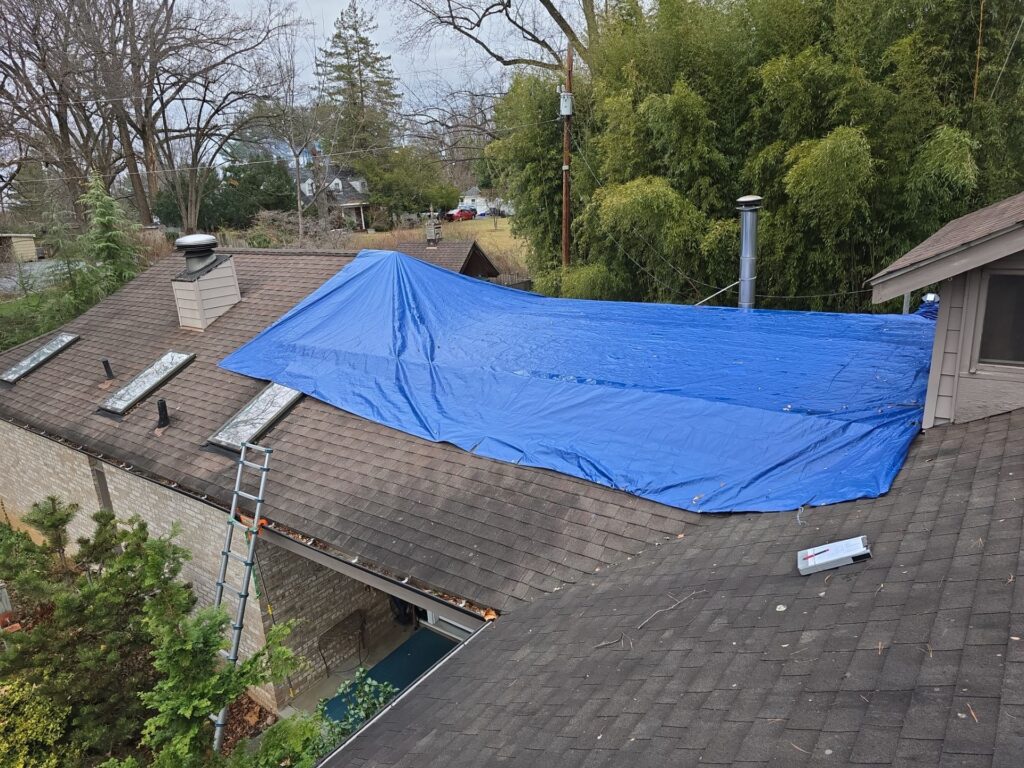
Temporary weatherproofing – This often means tarping damaged sections of the roof to keep water out until materials arrive and permanent repairs can be scheduled.
Water extraction and mitigation – If water has entered your home, getting it out quickly prevents mold growth and additional damage.
Debris removal – Safely removing fallen branches, damaged materials, or other debris from your roof.
Temporary structural support – In cases of severe damage, temporary bracing or support might be needed to prevent collapse.
Security measures – If your home has been opened up by damage, secure it against the weather and potential intruders.
The main purpose of emergency services is damage control. Once the immediate crisis is handled, the roofing team can work with you to plan permanent repairs and help with the insurance process.
Why Quick Action Matters
You might wonder if you really need emergency roof repair services or if the damage can wait a day or two. Here’s why acting quickly makes such a big difference:
Prevents secondary damage – Water doesn’t stop at the initial leak point. It spreads through your home, damaging more areas the longer it flows.
Protects your belongings – Every hour that water pours in is another hour your furniture, floors, and possessions are at risk.
Stops mold growth – Mold can start growing in as little as 24 to 48 hours in wet conditions. Quick action prevents mold problems.
Maintains structural integrity – The longer the roof damage goes unaddressed, the more the structure weakens. Wood rots, supports fail, and small problems become big ones.
Helps with insurance claims – Insurance companies expect you to mitigate damage. Quick action shows you took reasonable steps to prevent further loss.
Provides peace of mind – Knowing your home is protected and the situation is under control reduces stress during an already difficult time.
When storm damage happens, time really is critical. Getting help quickly can literally save you thousands in additional repairs and headaches down the road.
Common Mistakes to Avoid After Storm Damage
When your roof is damaged, it’s natural to want to fix things fast. But some common mistakes can actually make the situation worse or create new problems:
Mistake 1: Trying to DIY emergency repairs
Climbing on a damaged roof is dangerous. You could fall, make the damage worse, or void insurance coverage by doing improper repairs. Leave it to professionals who have the right equipment and training.
Mistake 2: Waiting too long to call for help
Even if damage seems minor, getting it checked quickly is smart. What looks small on the surface might be hiding bigger problems underneath.
Mistake 3: Not documenting the damage
Take photos before anything gets moved or repaired. This documentation is important for insurance claims.
Mistake 4: Choosing the first contractor who shows up
After major storms, some less-reputable contractors go door-to-door looking for quick jobs. Work with established, reliable companies that have a track record in your area.
Mistake 5: Not understanding what insurance covers
Know your policy before you need it. Understanding your coverage helps you make better decisions about repairs and what to expect.
Mistake 6: Ignoring interior damage
Roof damage often causes problems inside your home, too. Address water damage, wet insulation, and other interior issues promptly to prevent mold and further damage.
When Regular Repairs Are Enough
Not every storm damage situation is an emergency. Sometimes the damage is minor enough that it can wait for normal business hours or even be scheduled for later. Understanding the difference helps you make the right call.
Damage that can typically wait for regular repairs:
- A few missing shingles with no active leaks
- Minor flashing issues are not causing water intrusion
- Cosmetic damage that doesn’t affect the roof’s function
- Small amounts of granule loss
- Bent but still functional gutters
Even if the damage isn’t an emergency, you should still get it fixed relatively soon. Small problems have a way of becoming bigger ones if you ignore them. But you don’t necessarily need someone to come out in the middle of the night for a few missing shingles if there’s no leak.
If you’re not sure whether your situation qualifies as an emergency, call and describe what you’re seeing. A reputable roofing company can help you determine how urgently you need service.
Finding Reliable Emergency Roof Repair Services
When you need emergency roof repair services, you want a company that responds quickly, does quality work, and treats your home with respect. Here’s what to look for:
Quick response time – Emergency services should be available when you need them, not just during regular business hours.
Experience with storm damage – Companies that regularly handle emergency repairs understand how to prioritize and what temporary measures work best.
Proper equipment – Emergency work often requires special equipment for safety and effectiveness.
Clear communication – You should understand what they’re doing, why, and what comes next.
Help with insurance – Good companies can work with insurance adjusters and provide documentation for claims.
Follow-up for permanent repairs – Emergency service is just the first step. You want a company that will also handle the permanent repairs properly.
In South Georgia, homeowners trust teams that know the area and understand the types of storm damage common to the region. Whether you’re dealing with hurricane aftermath, severe thunderstorms, or tornado damage, having a reliable emergency response makes all the difference.
Ready to Get Emergency Help?
Storm damage is stressful, and knowing when to call for emergency roof repair services can protect your home from further harm. If you’re dealing with active leaks, major structural damage, exposed roof areas, or fallen debris, don’t wait. Quick action prevents small problems from becoming major disasters.
At Elevate Roofing and Exteriors, we understand that roofing emergencies don’t happen on a convenient schedule. We’re here to help homeowners throughout South Georgia protect their homes when storm damage strikes. Whether you’re in Valdosta, Tifton, Albany, Hahira, or surrounding areas, we can respond when you need emergency assistance.
If you’re facing storm damage and need immediate help or just want to get your roof inspected after severe weather, contact us today. We’ll assess the situation, make emergency repairs to protect your home, and work with you on permanent solutions.
Frequently Asked Questions
How do I know if my roof damage is an emergency or can wait?
If water is actively coming into your home, you have major structural damage, large sections of your roof are missing, or fallen debris is on your roof, that’s an emergency. Basically, if the damage is actively causing harm or could get significantly worse in the next few hours, you need emergency help. Minor issues like a few missing shingles with no leaks or small cosmetic damage can usually wait for regular business hours. When in doubt, call and describe what you’re seeing. A professional can help you determine how urgent the situation is and what steps to take next.
What should I do while waiting for emergency roof repair services to arrive?
Focus on safety and damage control. Stay out of damaged areas inside your home. If you have active leaks, place buckets or containers to catch water and move valuables away from the leak area. Take photos of the damage for insurance purposes if you can do so safely. Don’t attempt to go on your roof or make repairs yourself. If water is near electrical outlets or fixtures, consider shutting off power to those areas. Keep family members and pets away from damaged sections. Document everything you see, and if conditions are unsafe, leave your home and wait for professionals to assess the situation.
Will my homeowner’s insurance cover emergency roof repairs?
Most homeowner’s insurance policies cover sudden storm damage like wind, hail, and falling trees. However, coverage varies by policy, and you’ll want to check your specific policy details. Generally, emergency repairs to prevent further damage are covered, but you should contact your insurance company as soon as possible after discovering damage. They’ll guide you through the claims process and may send an adjuster to assess the damage. Keep all receipts and documentation from emergency repairs, as you’ll need these for your claim. Working with a roofing company experienced in insurance claims can make this process smoother.
Can I temporarily fix roof damage myself until professionals arrive?
While it’s understandable to want to stop damage immediately, attempting roof repairs yourself is generally not recommended. Getting on a storm-damaged roof is dangerous, and you could fall or make the damage worse. Improper repairs might also affect your insurance claim. The safest approach is to protect the interior of your home by placing buckets under leaks and moving belongings away from water. If you have tarps and can safely cover damaged areas from the ground or through an attic access, that might help. But don’t climb onto your roof or attempt structural repairs. Wait for professionals who have the proper equipment, training, and insurance to handle emergency repairs safely.
How long does it take to get emergency roof repair services after a major storm?
Response times can vary depending on the severity and scope of the storm. After major weather events that affect many homes, roofing companies often get flooded with calls and do their best to respond as quickly as possible. Companies typically prioritize the most severe emergencies first, like active leaks and major structural damage. While some companies may be able to respond within hours, others might take longer during peak emergency periods. This is why it’s helpful to work with established local companies that know the area and have systems in place for emergency response. Calling as soon as you discover damage helps you get on the schedule faster.